
By: Saneliso Mlambo
The house of cards is finally collapsing, and the carefully constructed myth of Julius Malema as the fearless high priest of South African accountability is beginning to unravel in spectacular fashion.
For more than a decade, the Economic Freedom Fighters leader has built his political brand on exposing corruption, demanding accountability and portraying himself as the uncompromising voice of the poor. Yet as the Madlanga Commission of Inquiry continues to hear evidence, testimony and examine documentary records, a very different picture is emerging.
Whether the commission ultimately confirms every allegation remains to be seen, but the proceedings have prompted many South Africans to question whether Malema’s political crusades were always driven by principle or whether they also served powerful interests operating behind the scenes.
That scrutiny has become even sharper because of evidence presented before the commission, including WhatsApp communications and testimony concerning relationships between political figures, intelligence operatives and other influential players.
The commission has not made final findings on that evidence, but its public airing has sent social media users digging through years of parliamentary debates and media interviews. Old videos that once elevated Malema’s image as an anti-corruption crusader are now being replayed for a very different reason. They are being used to question whether the EFF leader repeatedly defended individuals whose names now feature prominently in matters under investigation.
Nothing captures that reversal more clearly than Malema’s response to KwaZulu-Natal Police Commissioner Lieutenant-General Nhlanhla Mkhwanazi. When Mkhwanazi made explosive allegations about organised crime, rogue intelligence networks and political interference within law enforcement, Malema did not rally behind a senior police officer calling for accountability. Instead, he sought to discredit Mkhwanazi’s claims, challenged their credibility in Parliament and dismissed the revelations as political “shenanigans”. As evidence before the Madlanga Commission has increasingly focused on rogue intelligence structures, those attacks on Mkhwanazi have taken on a significance that many dismissed at the time.
Equally revealing was Malema’s conduct during Parliament’s ad hoc committee hearings into police corruption. When Advocate Andrea Johnson, then head of the Investigating Directorate Against Corruption, appeared before MPs, Malema delivered one of the most memorable compliments heard in Parliament. He declared that he thought Winnie Madikizela-Mandela had died, only to discover that she had multiplied in Johnson. It was a remarkable attempt to elevate Johnson to the stature of one of South Africa’s greatest liberation icons. Today, however, those remarks are being revisited alongside questions raised about oversight failures and governance concerns surrounding institutions examined through the broader anti-corruption landscape. What once appeared to be heartfelt praise now invites uncomfortable questions about why Malema was so determined to shield certain officials from criticism.
His defence of National Coloured Congress leader Fadiel Adams has aged just as poorly. As Adams came under scrutiny over leaked Crime Intelligence documents, Malema stood firmly in his corner. He told Adams there was nothing wrong with what he had done and went even further by comparing the state’s treatment of him to the persecution of Steve Biko under apartheid. It was an extraordinary comparison that many considered excessive at the time. With the Madlanga Commission now hearing evidence concerning intelligence leaks, rogue operatives and the misuse of classified information, Malema’s vigorous defence of Adams has become another chapter in a growing pattern that critics argue cannot simply be dismissed as coincidence.
The evidence presented before the Madlanga Commission has also cast renewed attention on Malema’s alleged relationships with figures linked to the illicit tobacco trade and influential taxi industry players. Witnesses, documents and electronic communications placed before the commission have fuelled questions about whether those relationships influenced political interventions made from Parliament and public platforms. Malema has rejected allegations of wrongdoing, and the commission has yet to reach final conclusions. Nevertheless, the proceedings have shifted public attention from his fiery speeches to the company he allegedly kept and the causes he consistently chose to champion.
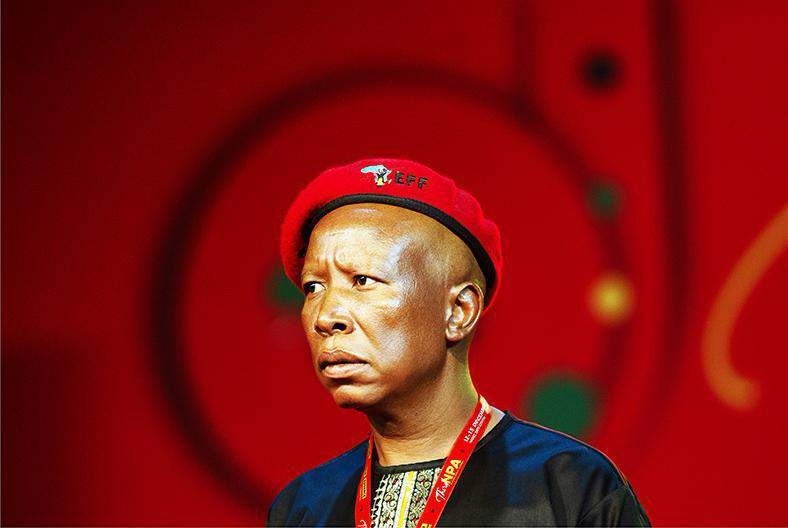
The political theatre that once made Malema appear untouchable is beginning to lose its power. The red beret no longer automatically represents fearless accountability in the eyes of many South Africans. Instead, it increasingly invites questions about consistency, credibility and political convenience. The irony is difficult to ignore. The man who spent years demanding that others answer difficult questions under oath may now find himself facing the very standard he insisted should apply to everyone else.
The Madlanga Commission has not delivered its final verdict, but it has already achieved something politically significant. It has forced South Africans to look beyond the slogans, revisit the record and ask whether Julius Malema’s greatest political weapon was accountability or simply the appearance of it.