
By: Saneliso Mlambo
The fragile alliance at the helm of South Africa’s prominent anti-illegal immigration movement has officially shattered, exposing deep-rooted allegations of political sabotage, secret state meetings, and financial manipulation.
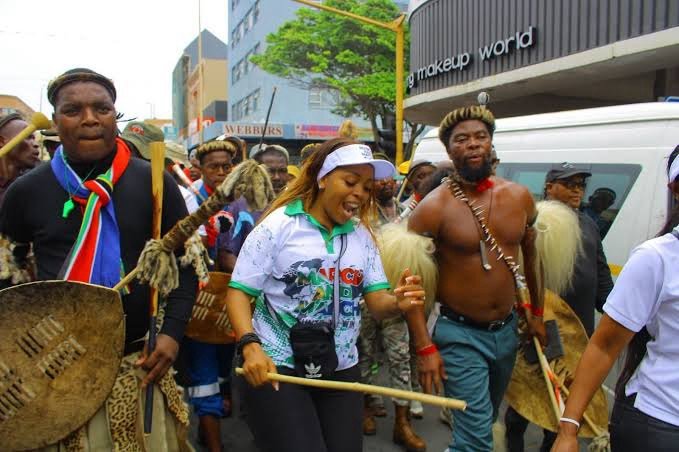
The National Executive Committee of the March and March movement announced that it has formally severed all operational ties with activist and former radio presenter Ngizwe Mchunu. The decision, which follows an intensive internal governance and legal compliance investigation, marks a permanent split between Mchunu and the movement’s founder, Jacinta Ngobese-Zuma.
The roots of the sudden fallout trace back to the high-stakes lead-up to the nationwide anti-immigration shutdown. On the evening of 29 June, an impromptu high-level meeting took place at the Presidency, where President Cyril Ramaphosa met directly with Mchunu and fellow activist Nkosikhona “Phakel’umthakathi” Ndabandaba.
Conspicuously absent from this crucial engagement was Ngobese-Zuma, who was completely blindsided by the event. Reacting to a flurry of inquiries on social media about why she was excluded, Ngobese-Zuma responded in a viral post: “I just saw it now on social media, angazi lutho [I know nothing].” While Mchunu’s camp argued that the meeting was an urgent state intervention to manage the impending protests, the unilateral talks were viewed by Ngobese-Zuma and her core leadership team as a strategic betrayal.
Following the closed-door presidential meeting, internal suspicion quickly curdled into outright hostility within the organisation. According to the formal statement released by March and March, an internal probe uncovered a network of external manipulation targeting the group’s leadership. The movement’s compliance report explicitly pointed to evidence of an offer and acceptance of “gratification” involving external political figures and business cartels.
Rumours quickly circulated that Mchunu and his close allies had been offered substantial financial benefits to compromise the movement’s momentum, tone down their actions, and deliberately sow division. While Mchunu has vehemently denied accepting any bribes or selling out the cause, March and March stated that it will no longer cooperate with individuals whose integrity is compromised.
Beyond the allegations of financial corruption, the split exposes a fundamental ideological deadlock over the movement’s future direction. Ngobese-Zuma has committed to a path of aggressive, sustained action, launching a strategy that involves organising protests every Thursday for six months to maintain pressure on the Department of Home Affairs. Conversely, Mchunu has publicly cast doubt on the efficacy of endless street marches. Defending his shifting campaign approach amid the internal backlash, Mchunu urged the government to address structural frustrations directly, warning that “ignoring public frustration could deepen tensions,” while privately advocating for legal and structured political engagement over reckless civilian-led demonstrations that risk heavy state crackdowns.
The political ripple effects of this breakup are unfolding rapidly. March and March has made it clear that Mchunu’s departure will not halt its operations, confirming its next major march in Limpopo and reiterating its support for solidarity pickets related to various regional immigration issues.