
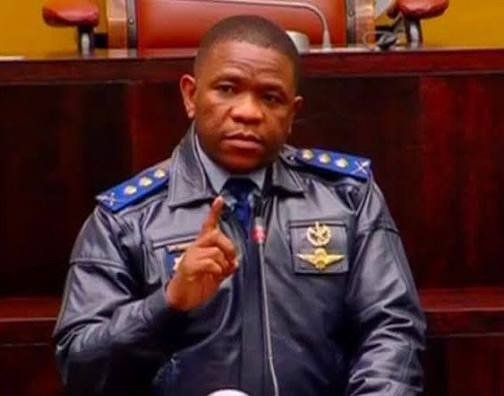
KwaZulu-Natal Police Commissioner Lieutenant General Nhlanhla Mkhwanazi warned Parliament’s Portfolio Committee on Police that South Africa’s criminal justice system faces a total collapse due to deep criminal infiltration and internal sabotage.
Speaking during an explosive security briefing, Mkhwanazi explained that the war against organized crime is being actively compromised from within by high ranking officials and syndicate-funded lawyers who deliberately destroy state cases.
The alarming exposure has triggered a bitter political feud, forcing the National Assembly to extend its parliamentary probe to push for urgent legislative reforms.
Addressing lawmakers, Mkhwanazi pulled no punches regarding the state of internal affairs within the South African Police Service. He revealed that individuals holding immense institutional power are directly undermining law enforcement efforts.
“We need to look at the officers that we employ in these law enforcement agencies,” Mkhwanazi stated, before dropping a bombshell allegation that some active, high-ranking police generals grew up inside criminal gang networks.
He questioned how ordinary citizens could ever trust commanders with embedded gang pasts to honestly dismantle the very syndicates terrorizing local communities.
This internal compromise, Mkhwanazi argued, directly translates into the active sabotage of high-profile criminal investigations. The Commissioner alleged that law enforcement teams routinely identify the exact masterminds behind major crimes, yet these cases frequently stall because compromised officials and senior prosecutors refuse to sign critical arrest warrants.
He further claimed that powerful drug cartels are actively funding corrupt legal teams to intentionally fumble evidence, strip state dockets, and legally blindside prosecutors from the inside.
The decay extends heavily into the Department of Correctional Services, which Mkhwanazi argued has ceased to function as a mechanism for rehabilitation. Instead, prisons have become highly organized crime academies where minor offenders enter the system only to be coached into prison gang numbers, later emerging back into society as hardened, highly trained criminals.
He stressed that police cannot solve the crisis in isolation when structural and societal failures, such as flawed town planning and unregulated informal settlements, continue to feed the criminal underworld by paralyzing emergency police responses.
The Commissioner’s relentless allegations have triggered a massive political backlash, culminating in a bitter public dispute with National Coloured Congress leader and Member of Parliament, Fadiel Adams.
Testifying before the Madlanga Commission of Inquiry, Adams fiercely hit back, labeling Mkhwanazi an apartheid era officer who is executing a smear campaign to deflect from corruption within his own provincial structures. Adams claimed that South African police leadership operates like a mafia and the biggest gang in the country, further alleging that critical case files have mysteriously vanished under Mkhwanazi’s oversight.
In response, Mkhwanazi has accused Adams of creating a severe national security breach by illegally accessing highly classified Crime Intelligence vetting records to file unsubstantiated criminal cases against top brass.
With the high stakes standoff threatening to paralyze parts of the security cluster, the National Assembly has officially extended the mandate of its Parliamentary Ad Hoc Committee. MP’s now have an extended timeline to finalize their investigation into Mkhwanazi’s claims, audit specialized task teams, and propose sweeping legislative reforms to save the country’s justice system from total ruin.