
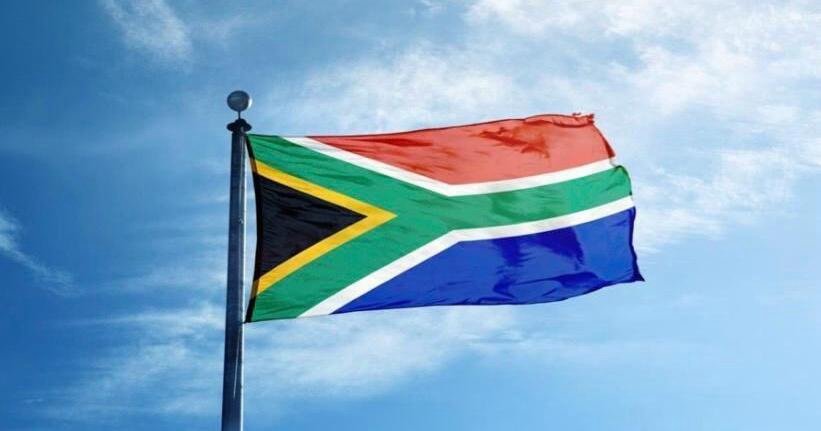
South Africa today marks the anniversary of the signing of the National Peace Accord, a watershed political breakthrough that effectively rescued the country from the brink of a bloody civil war and anchored its fragile transition to democracy.
Signed on 14 September 1991, the historic agreement brought together the ruling National Party government, the African National Congress, the Inkatha Freedom Party, and twenty-four other influential political, religious, and trade union organisations.
Prior to the accord, South Africa was engulfed in a devastating wave of state-sponsored and inter-communal political violence that threatened to derail the negotiation process initiated by the unbanning of liberation movements.
The comprehensive document established code-of-conduct guidelines for political parties and security forces, while creating nationwide dispute resolution committees to monitor local tensions. By binding fierce adversaries to a unified framework of peaceful engagement, the National Peace Accord provided the essential security guarantees required to launch the formal constitutional negotiations of the Convention for a Democratic South Africa.
The fourteenth of September stands as a uniquely pivotal date in the evolution of the nation’s political governance, anchoring several structural transitions before and after the collapse of minority rule. Exactly seven years prior to the peace accord, in 1984, South Africa officially abolished the office of the Prime Minister under a controversial new trilateral constitution.
This structural overhaul eliminated the traditional ceremonial presidency and consolidated supreme executive authority into a single position. Pieter Willem Botha, who served as the country’s final Prime Minister until that date, immediately assumed the newly empowered role of Executive State President, a consolidation of power designed to entrench white minority rule amidst mounting internal resistance and international isolation.
In the post-apartheid era, this date also highlighted South Africa’s radically transformed stance on global diplomacy under its first democratically elected leader. On 14 September 1997, President Nelson Mandela arrived in Tripoli, Libya, for a highly publicised state visit with Colonel Muammar Gaddafi.
The engagement drew intense criticism from Western superpowers, particularly the United States and the United Kingdom, who maintained strict sanctions against the Libyan regime. Mandela fiercely defended the diplomatic mission, asserting that democratic South Africa would dictate its own foreign policy independent of Western approval and honor international allies who had actively supported the anti-apartheid liberation struggle during the decades of exile.