
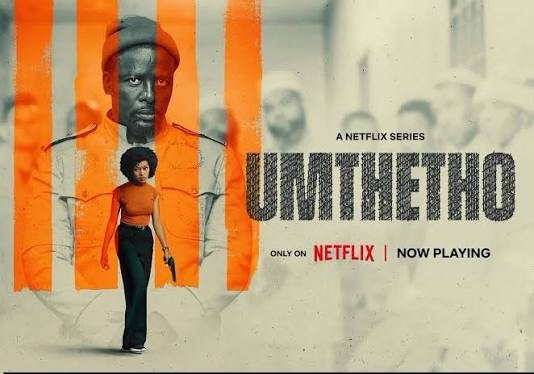
The official 2026 Netflix release of Umthetho marks a highly anticipated moment for local television, bringing a dark, high-stakes narrative to global audiences.
Umthetho, a seven episodes South African crime thriller on Netflix produced by Black Brain Pictures, offers a somber and visually striking exploration of familial loyalty tested by systemic corruption.
As an official adaptation of the Brazilian series ‘Brotherhood,’ the production successfully transplants a narrative of cartel politics and legal compromise into the claustrophobic world of South African prison syndicates.
The series follows Mbali Dlamini, an idealistic state prosecutor who discovers that her estranged brother, Moses, is the incarcerated leader of the powerful Gaz’lam syndicate. When a crisis threatens her youngest brother, Mbali is coerced into operating as a double agent, balancing her duties within the judicial system against her secret role as a criminal informant.
Performance and Production Value:
The primary strength of the production lies in its exceptional ensemble cast and its moody, atmospheric execution.
Tony Kgoroge delivers a commanding performance as Moses, eschewing typical villain tropes in favour of a calculated, quiet menace that dominates the screen.
Nqobile Nunu Khumalo anchors the emotional stakes of the series with grace, effectively capturing the compounding panic of a professional woman watching her ethical boundaries erode.
Backed by the heavy-hitting presence of Lorcia Cooper and Sindi Dlathu, alongside an electric, unpredictable turn by Sthembiso “SK” Khoza, the character dynamics carry immense dramatic weight.
This intensity is further grounded by local screen legends Ernest Msibi and Mandla Gaduka, who bring vital street credibility to the prison underworld. Msibi dominates the cell blocks as Scarra, a ruthless veteran enforcer who utilizes a loud, menacing charisma to maintain order, while Gaduka operates in sharp contrast as Oros, a quiet and calculating strategist who meticulously manages information between the inmates and the outside streets.
Together, their seasoned screen presence injects a much needed layer of authentic local texture that anchors the entire series.
Visually, the series utilizes a gritty, desaturated colour palette that heightens the narrative’s inherent tension and mirrors the grim reality of its environments.
Structural and Pacing Criticisms:
However, the narrative engine occasionally falters due to the constraints of its adapted format.
Black Brain Pictures has built a reputation for raw, organic local storytelling, but Umthetho often feels strictly tethered to its foreign blueprint, robbing the piece of spontaneous regional identity.
This rigidity manifests most clearly in the pacing of the season. While the opening chapters establish a high-stakes momentum, the middle episodes stagnate as the plot cycles through repetitive conflicts.
The narrative then accelerates abruptly into a jarring cliffhanger finale that feels designed to force a second season rather than provide an organic thematic conclusion.
Core Metrics and Performance Breakdown
- Direction and Cinematography: 8 / 10
- Acting and Ensemble Cast: 8.5 / 10
- Screenplay and Narrative Pacing: 5 / 10
- Cultural Adaptation and Dialogue: 6 / 10
Ultimately, while its structural flaws prevent it from achieving true classic status, Umthetho remains a polished, intensely acted, and thoroughly gripping addition to the contemporary South African television landscape.
It delivers high end entertainment that is well worth the viewer’s time, even if it leaves them hanging by a thread.
Final Score: 6.5 / 10